

The average age of a first-time homebuyer in Europe is 31.3 years, but this figure conceals a vast disparity between countries, reflecting diverse attitudes towards real estate. This data is reported by Euro News, citing the RE/MAX European Housing Trend Report.

Who Buys Earlier and Why
Malta leads among young buyers, where the first home is typically purchased at an average age of 28. The United Kingdom and Luxembourg share second place with a figure of 28.4 years, followed by Hungary (28.5) and the Netherlands (28.8).
In Britain, family financial assistance plays a crucial role; over half (53%) of young people aged 18-34 receive a significant monetary gift or inheritance from their grandparents to purchase a home. This is one of the highest rates in Europe and explains why Britons become homeowners so early.
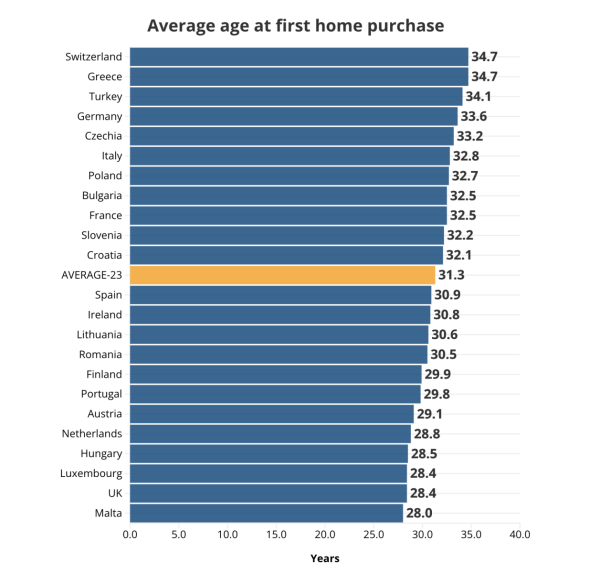
Spain ranks second among the EU’s five largest economies at 30.9 years. Young Spaniards and Italians typically live with their parents until around age 29, which allows them to save for at least a down payment but simultaneously delays their entry into the property market.
Who Buys Later and Why
The latest first-time property purchases occur in Greece, Switzerland (34.7), and Turkey (34.1).
Among the five largest economies, the oldest first-time buyers are in Germany (33.6 years). The reason is not a lack of funds but rather cultural norms; renting is considered a fully viable long-term alternative to homeownership, rather than a temporary phase. Among young Germans, 69% rent their homes, compared to the European average of 38%.
The situation in France is quite different: young people leave their parents’ homes at an average age of 22, as soon as the opportunity arises, but family financial support for purchases is significantly less common. Only one-third of French buyers receive money or inheritances from their parents; young people begin saving independently for their own homes while still at university. In the meantime, they live in rented accommodation.
Researchers note that there is no direct correlation between the age of a first-time buyer and the homeownership rate in a country. This implies that a later purchasing age does not necessarily correspond with property prices within a nation.