
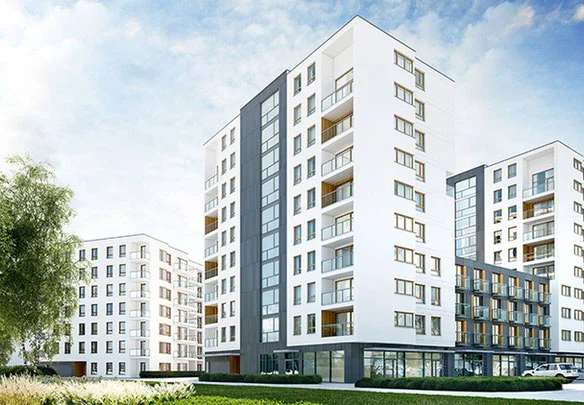
Poland is constructing apartments as if the country’s population were expanding, despite demographic statistics indicating the opposite. According to rp.pl, developers might build over 1 million apartments between 2026 and 2030, intended for 2 to 2.5 million new residents. Concurrently, the nation’s population could shrink by more than 650,000 people during this period. This figure is roughly equivalent to the current population of Poznań.
0
► Read the Minfin Telegram channel: top financial news
Demographic Decline Instead of Increased Demand
Poland’s population stands at approximately 37.3 million, plus 961,000 Ukrainians. However, the number of people is rapidly decreasing: from 2020 to 2025, the country lost 893,700 inhabitants, and by 2050, it might see a 20% population reduction.
Birth rates are falling: while over 700,000 children were born annually in the 1980s, the current figure is around 250,000. Under a pessimistic scenario, this number could drop below 100,000, as reported by rp.pl.
Another demographic trend is creating additional pressure on the market: according to comparic.pl, approximately 406,000 people died in Poland in 2025. This is nearly three times the annual volume of new housing construction (around 134,000 apartments).
Even with a conservative estimate that only 20-30% of deaths free up housing, 80,000 to 120,000 apartments could enter the secondary market each year. This implies that access to housing for buyers will increasingly be determined not by mortgages, but by inheritance.
The Role of Ukrainians in Sustaining Demand
Migration from Ukraine has been masking the scale of the demographic crisis for the real estate market for years. Robert Chojnacki, founder of the Tabelaofert.pl portal, notes that without this factor, sales departments would have felt a decline in demand much sooner.
However, today, amidst right-wing radical calls, the migratory factor is weakening.
This represents a key vulnerability for the Polish construction sector: demand in recent years has been largely sustained not by organic population growth in Poland, but by the presence of Ukrainian tenants and buyers.
If this factor continues to diminish due to some Ukrainians returning home or moving to other countries, changes in migration policy, or intensified anti-Ukrainian rhetoric from officials, the market could lose another pillar just as Poland’s own demographics are no longer capable of meeting the real estate supply.
What This Means for Developers
Experts from both publications agree that continuing to build “as before” is no longer feasible. Chojnacki emphasizes that the question is no longer “how many apartments to build,” but “for whom, where, and to what standard.”
Jarosław Jędrzyński, an analyst at RynekPierwotny.pl, adds that the biggest challenge in the coming decades may not be finding buyers, but rather determining what to do with millions of existing apartments and at what price they can be sold.
Meanwhile, developers continue to build at a pace calculated for optimistic demand forecasts. However, this demand relies on two factors that developers cannot control: rapidly deteriorating demographics and migration patterns that could reverse.